

“My grandfather came from a good Irish family,” says Dan Kane. “His father immigrated to the United States from Leitrim, a border county in Ireland. His mother came from County Clare. They were the second wave of Irish – the group after the Potato Famine.”
Dan’s great-grandparents settled in Lowell, MA in the mid- to late-1870s. A growing and bustling industrial mill town, Lowell is now recognized as the seat of the American Industrial Revolution.
The town founders situated their textile mills along the Merrimack River in 1820 in order to take advantage of the “upstream Pawtucket Falls, where over the course of one mile, the river plunged 32 feet.
“In 1822, workers began constructing a power canal system that became one of the largest of its kind in the world – comprising 5.6 miles. Soon after completing the canals and first mill buildings in 1823, Lowell was the nation’s leading producer of textiles and employed the largest number of factory workers in America.” (Lowell National Historical Park website; all links below).
The city incorporated in 1826.
The story of Lowell has been well-documented: the rise and fall of the textile mills and the poor working conditions; the city’s growth, decline, and rebirth; and its people, from the Yankee “mill girls” and waves of immigrant workers to industrialists, merchants, and famous residents that include Jack Kerouac and Bette Davis.
Today, you can visit the rehabbed Boott Cotton Mill complex, part of the National Park Service, and see and hear the old looms running. You can take a boat trip on the Pawtucket canal and learn how the locks worked – mechanisms used to raise and lower boats on stretches of the canal where the water levels were different.
For a history buff like me, it’s easy to become swept up in the vast amount information available. I spent hours in my library’s historical archives, and online.
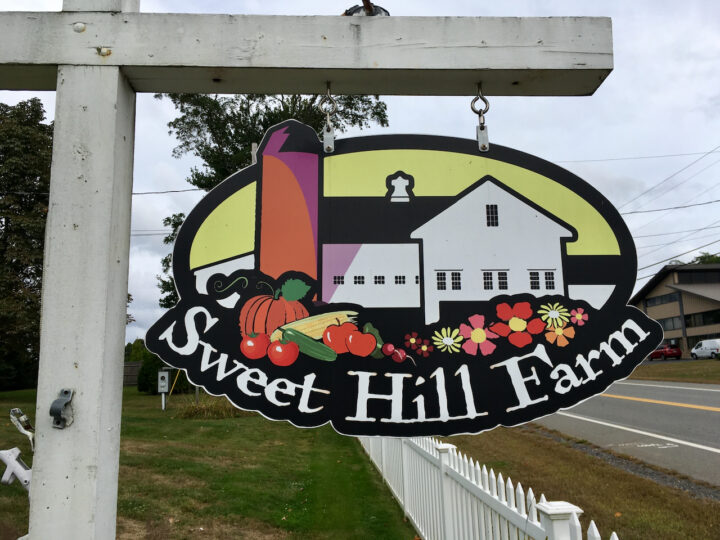
Dan Kane is a history buff, too. Born and raised in Lowell, MA, he now owns Sweet Hill Farm, the last working farm in Plaistow, NH where we both live. He was the inspiration for my write up about the USPS because he’s building a tavern – the farm being the site of the “last tavern” on the border of MA and NH for the Boston to Concord stagecoach route.
He often drives by while I’m out walking my dog Rocky and sometimes will stop for a quick chat; it was during one of these conversations, when I mentioned my 250 Years of Manufacturing History focus, that he said, “My grandfather laid the cobblestones on Middle Street in Lowell.”
What?! My story antenna immediately twanged, so I asked for an interview.
“Firm, stern, and Irish”
Born May 17, 1893, to Patrick Kane (1864 – 1937) and Annie Flood Kane (1874 – 1944) Michael Henry Kane was the third of seven children. A machinist by trade, his father Patrick was a resident of Lowell for more than half a century. Annie was known for her regular church attendance. Both were widely known in the South End section of Lowell, where they resided at 49 Chapel Street.
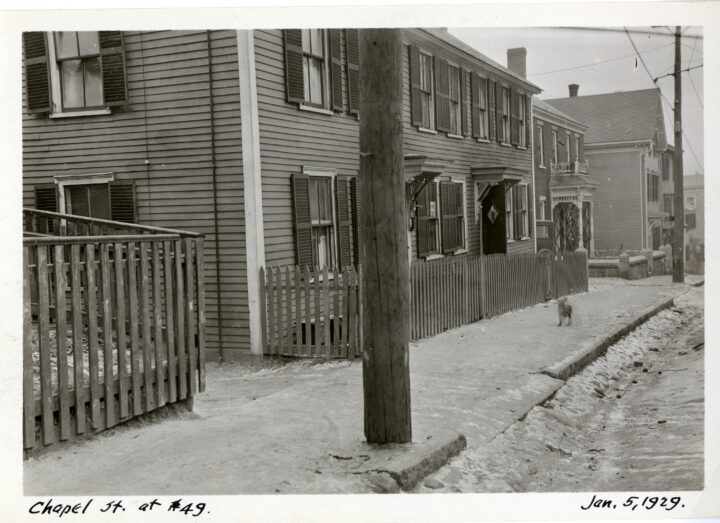
Details about Michael Kane’s life are few, but from information my librarian found on Ancestry.com, he had two separate draft cards for WWI and WWII; Dan says he wasn’t drafted.
His funeral notice stated he and his wife Margaret (Mullaney) were members of St. Michael’s Church (founded 1883) in Lowell, and that he was a 50-year member of St. Michael’s Holy Name Society.
According to Dan (and confirmed by his obituary), Michael Kane worked as a stonemason for the City of Lowell his entire life. This meant he was a skilled and in-demand laborer; his job would have entailed building or repairing anything made of stone in the city – from bridges, archways, walkways, and roadways to commercial and government buildings.
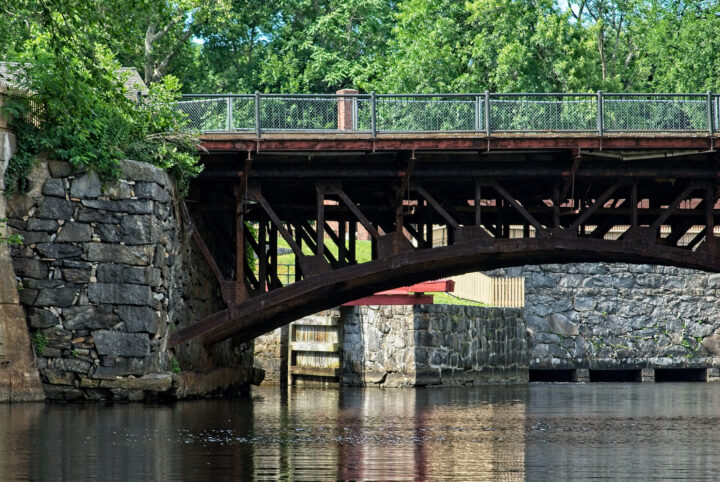
Stonemasonry is an honorable tradition that goes back centuries in Europe – especially the UK and Ireland. It was a common occupation ca. 1900 and was considered part of the building trades.
A family story comes to life
The story about the Middle Street cobblestones came from Dan’s father: “My father said he would take Granddad his lunch while he was cutting and laying stones for Middle Street,” Dan says. “It was one of those stories you hear growing up.”
According to a Facebook post by the Lowell Historic Board, “Middle Street was initially developed in the 1830s and 1840s as a residential street. The street was rapidly redeveloped with four and five story commercial and light-industrial buildings in the 1880s and 1890s.”
I did a ton of research for this piece, and couldn’t find anything about the Middle Street cobblestones or who put them in. Nor did the Lowell Historical Society have any information.
“That makes sense,” said Dan. “Repairing the street wouldn’t have been news.” He’s right, of course; here in New England the asphalt roads get pretty chewed up from winter freeze and thaws, snow plows, salt, and frost heaves. Crews are always fixing pot holes or repairing sections of roads.
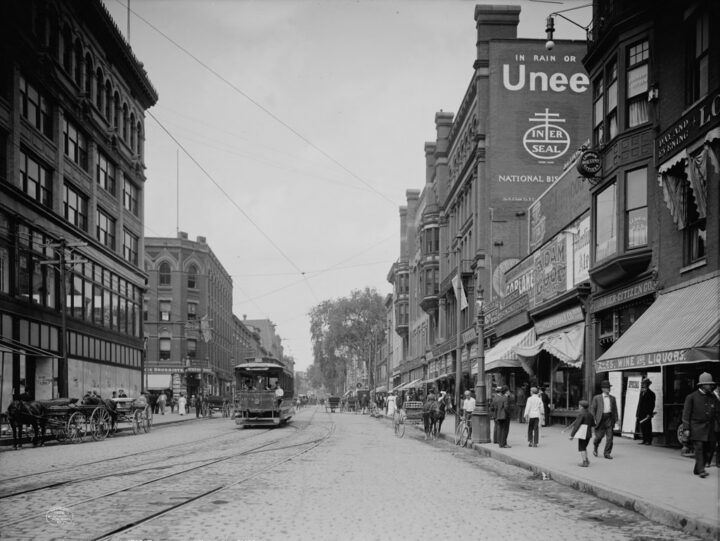
At any rate, Middle Street is part of downtown Lowell’s historic district that also includes Merrimack Street, which runs parallel to Middle Street. The cobblestones were in place in the early 1900s, as evidenced by this 1908 photo, courtesy of the Lost New England blog. It shows Merrimack Street with its trolley tracks and cobblestones.
While doing research, I learned of the Great Flood of 1936 – which saw 14 days of rain! – and resulted in 26 feet of water submerging Lowell and several New England towns along the Merrimack River in Massachusetts, New Hampshire, and Connecticut.
“My mother’s family lived near the banks of the Merrimack and the water came up to their second story windows,” says Dan.
Presumably, Middle Street and other streets in Lowell needed repair post flood. “If my dad was taking Granddad lunch each day, and walking to downtown Lowell from where the family lived, he would have been around 10 years old, so ca. 1940,” says Dan.
I asked why Lowell replaced the stones rather than covering them in asphalt. “Asphalt wasn’t widely used pre-WWII,” says Dan. “Streets in Lowell were slowly repaved with it after the war. They also wanted to preserve a few of the older cobblestone streets.”
Today, Merrimack Street is a busy interchange in the downtown, paved with asphalt. The electric trolleys were taken out of service in 1935 – but you can still see them at the Lowell Trolley Museum.
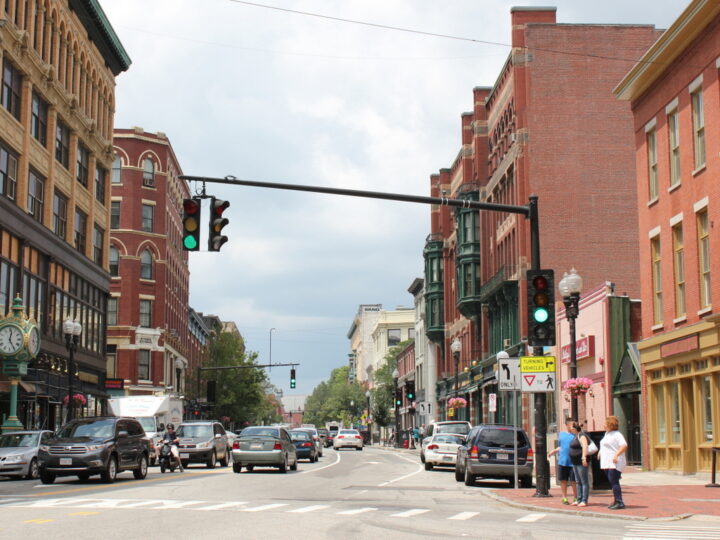
Cobblestones crafted by hand
I’ve been to Lowell’s historic district many times over the years, and have walked and driven the cobblestone streets. They’re hard to walk on, so if you’re wearing heels or good shoes with slick soles, you have to be careful.
Before doing this write up, I drove to Lowell on a quiet Sunday morning and simply stood in the middle of the street to study the craftsmanship. I ran my hands over the stones and admired how they fit together perfectly. Michael Kane’s work is amazing.

Cutting stone, and getting each one to fit exactly, was a real skill, as you can see from the photo.
“Stonemasons,” says Dan, “took rough cut stones and, using their craft, altered each one to get it to fit in place. My grandfather probably worked on a crew, and he had to work fast.”
The stones had to lie flat to make the road as smooth as possible to prevent damage to vehicles and the goods they transported.
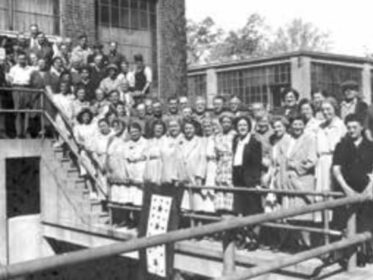
Dan added, “If you had walked down Middle and taken a left at the end, you would have ended up at one of the mills where my grandparents worked. My mother’s mother worked at one of the hosiery mills her entire life – so they always had socks.”
(As an aside, the story comes full circle: Dan and his wife, Theresa, had a hospice business on Middle Street from 2005 – 2012.)
When I asked what he remembered most about his grandfather, Dan said, “Sitting in his easy chair and smiling. He was in his late 60s, early 70s; he had lung cancer because he was a smoker. He would give each of us a quarter when we visited, which was every weekend for Sunday dinner.
“He was also pretty crafty. The house he and my grandmother owned had nice stairs my grandfather had made. I remember thinking they were pretty cool.”
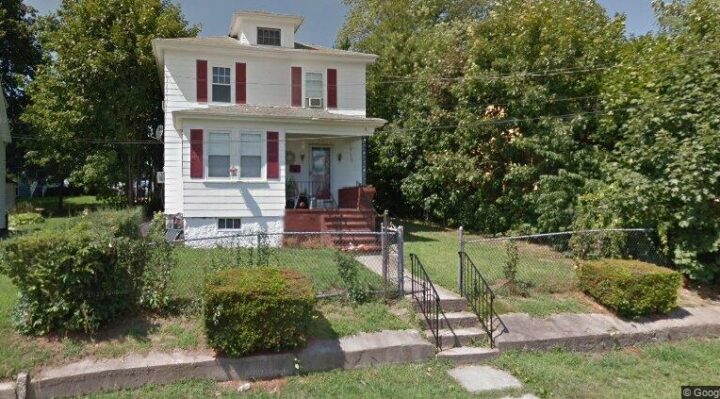
Michael Henry Kane died on October 12, 1967 during game 7 of the Red Sox and St. Louis Cardinals World Series. He was survived by his wife, two sons, two daughters, and 16 grandchildren.
Post-script
Michael Kane lived an ordinary life: He worked hard, married, and raised a family. He attended church and followed the Red Sox.
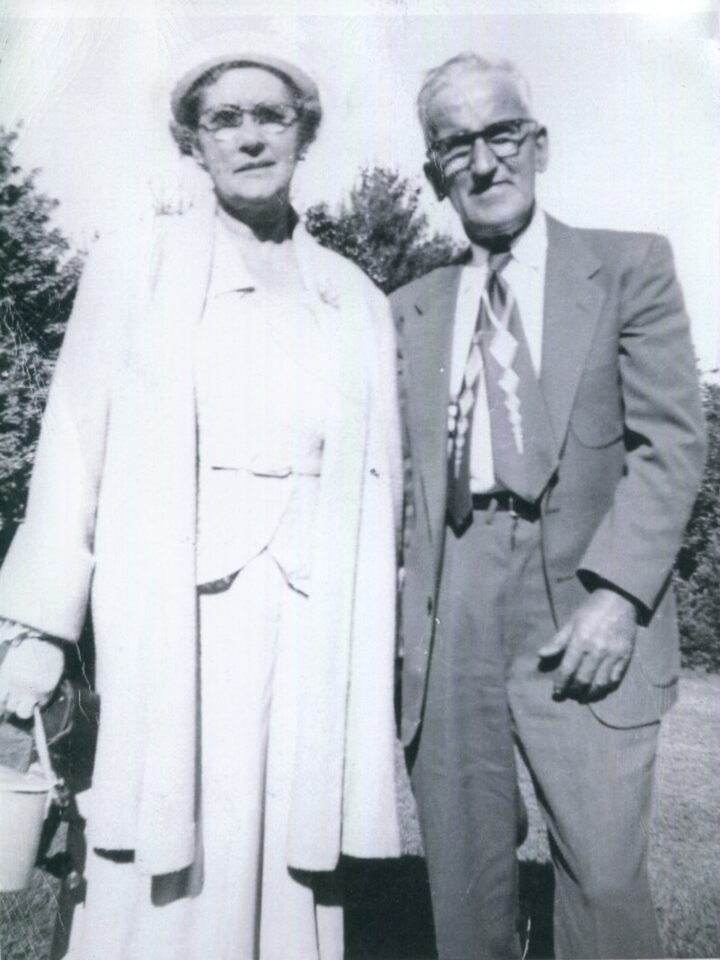
Yet his story is extraordinary as well because it’s part of the much larger Lowell manufacturing story. He lived through several wars, the Great Depression, and severe weather events. He survived various disease outbreaks.
He watched the Lowell textile mills close and the local jobs leave for the southern U.S., but he also experienced the post-WWII industrial boom in America.
Although Dan considers his anecdote to me about his grandfather an “off the cuff” remark, I see it as a story that had to be told before it’s lost.
In the midst of technological and societal change, Michael Kane stands as a testament to the greatness of American industry, ingenuity, and pride in one’s work.
Thank you, Dan, for sharing his story. I’m honored to feature it on my blog.
Shout-out to some librarians
A huge thank you to the librarians at the Plaistow Public Library, Jen O’Connor, Raven Gregg, and Kelli Lennon.
Jen O’Connor, Programming & Publicity, researched the surrounding local libraries to see who had a subscription to Newspaper Archives (obituaries).
Raven Gregg, Technical Services, also manages the historical room, which she opened for me so that I had access to numerous books about Lowell.
Kelli Lennon, Head of Circulation, provided a list of older newspapers pre-1893.
And, a huge THANK YOU to Jennifer Browning, Reference Librarian for the Lowell Public Library. She sent over Michael Kane’s obituary and funeral notice.
Links
National Park Service, Boott Cotton Mills Musuem
Lowell National Historical Park, Water in the Mills
Find a Grave, Patrick Kane (1864 – 1937)
Seashore Trolley Museum, History of Streetcars in Lowell, MA
Lowell Historic Board, Facebook post about Middle Street
Heritage Discovery Center, Common Occupations in 1900
Lost New England Blog, Merrimack Street, Lowell MA
UMASS Lowell, “The Great Flood in Lowell – 1936”
Full Disclosure
I’m not paid nor asked to write about products or the companies that make them. All links in this piece are FREE — meaning, they’re not sponsored or paid for.
My mission is to keep manufacturing jobs stateside and this blog is my way of giving back. We like to think a “small” choice, such as purchasing something made in the US by American workers, won’t make a difference. It does.


Raven Gregg
Dianna,
This is an excellent piece! Thank you so much for sharing this with me. I had no idea about this bit of history and appreciate learning it. I do love the photos that accompanied the article. It was a pleasure to help you (and Rocky) that day!
Dianna Huff
Thank you, Raven, and for taking the time to read it and leave a comment. Rocky always loves visiting you!