In case you’ve missed it (and it’s ok if you have), pretty much anything associated with Google in the last year has created a great deal of chatter, outrage, and anxiety across the search industry.
The DOJ Federal antitrust case, “uncovered mountains of evidence of deceptive and fraudulent business practices by Google’s Ads program” that proved Google was raising costs in order to generate more profit. (Source)
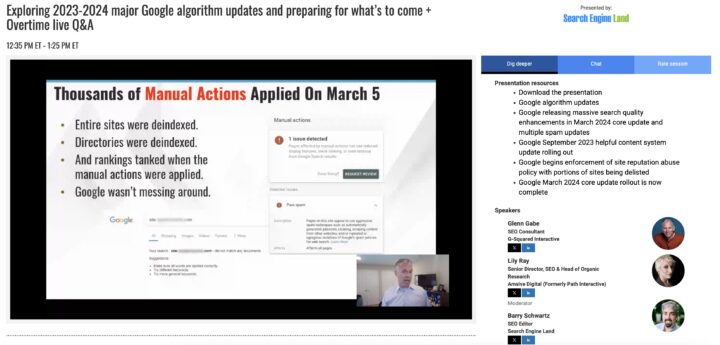
Months of algorithm updates have wiped out dozens of websites, according to SEO consultant Glenn Gabe in his June 2024 Advanced SMX presentation. Some sites saw a 97% reduction in traffic and have yet to recover.
Some people believe Google is waging a war on small business, with SEOers using data to prove the top ranking websites for news, e-comm, and common search queries belong to big brands with big marketing budgets (and thus can “game” the system).
Then you had the owners of some of these smaller websites howling in protest when, after their sites were removed by Google for “low quality spam,” found their content in Google’s AI Overviews. Opps.
And speaking of AI, Google had to quickly address a fast moving crisis when its AI began showing questionable answers to queries, some of which included information that could harm people (e.g. “use glue to keep the cheese on your pizza”).
And lastly, the week of May 27 saw the leak by company whistleblowers of internal documents. Reading everything about this leak, and what it all meant, consumed a great deal of my time. (Read the first analysis by Michael King at iPullRank.)
For days, my head was spinning! But, reading all the commentary made me see that I’ve been doing things right all this time.
Client websites stayed out of the fray
As part of the marketing I do for our clients, I routinely check traffic trends using Matomo Analytics. (I switched to Matomo from Google Analytics in 2023 — read the full story.)
I do this regular checking because, many years ago, I had a client in the healthcare industry who lost half her traffic after the Google Your Money or Your Life update. That was scary, but we made the recommended changes and her site bounced back several months later.
Since then, I closely watch and listen to the chatter about algorithm updates.
I admit, I’m not a technical SEOer. I began teaching myself SEO in 2001, when title tags, keywords, and copy reigned supreme. For years, SEO was all about good marketing; I built a thriving business around it.
Today, SEO is about tools, big data, and algorithm chasing. A lot of what I read is way over my head. So, I ignore it, which is a good thing.
Because our work with smaller manufacturers is results-based (see our Conversion Reporting service), I continue to practice practical, and dare I say it, old-fashioned SEO and copywriting.
One reason is because our clients’ data sets are much, much smaller than that of big brands. The other reason is because 99% of what I read with regard to SEO / PPC / marketing advice doesn’t apply. It’s based on standardized thinking.
We also build websites that meet Google’s stated guidelines. We don’t use any gimmicks or tricks to game the search engine. Our websites ensure a good user experience and are built to answer prospects’ questions.
Clients who have us do their ongoing marketing see good conversion rates and very high Visit to Conversion and Days to Conversion rates. For example, one client sees 80% of conversions (RFQs, email, and phone calls) happen within the same day. The following data chart shows one month of conversions.
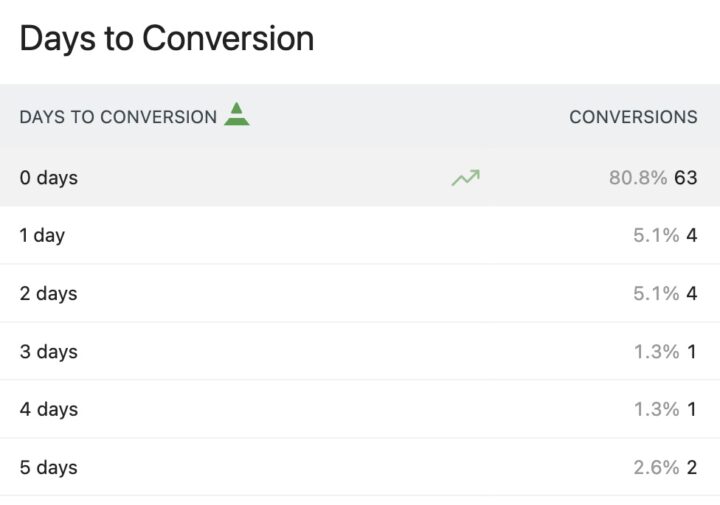
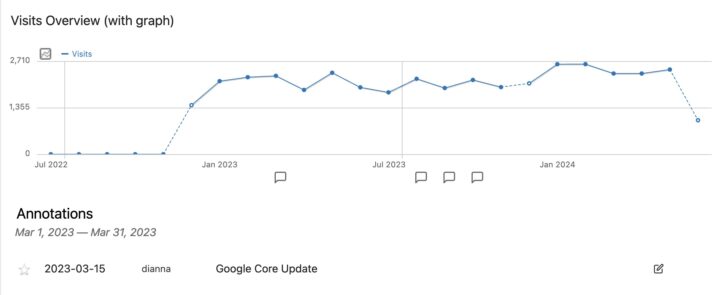
We make continual website updates to improve the UX, create original content based on feedback from our clients’ customers, and focus on conversions versus algorithms or rankings. Hence, Google’s updates have little to no impact on client website traffic.
BUT . . . You need a plan
Several years ago, I noted that Google’s Featured Snippets were a good first step for the search engine to move to no-click search. Type in a question, Google would provide the answer, and you had what you needed.

For this reason, I stopped creating “how to” content for clients. Why make it easy for people to read an answer without having to visit the website?
I had also read Google Semantic Search by David Amerland, a fantastic book about how to increase website traffic and brand impact, and amplify one’s online presence.
Basically, it’s all about content — as in, creating content that’s relevant to your business and helps site visitors make the decision to contact or do business with you.
Today, a well-built website and relevant content serves as a strong foundation for online marketing, advice that’s also echoed by Google’s Search Liaison Danny Sullivan in this Search Engine Land piece, Google to struggling sites: Focus on your audience, content quality. (Sullivan is one of the early SEOers I used to follow and learn from.)
At some point, however, the Google search engine is going to stop sending so much free traffic.
As I noted in my 2014 piece, “The Day Google Died,” Google’s Matt Cutts stated in his PubCon 2013 keynote that Google’s mission is to organize the world’s information. He added, “The words ‘search engine’ do not appear in our mission statement.”
That’s pretty much where we’re headed — if we’re not there already. We’re a long way from the original 10 blue links search results page.
So what do you, the smaller manufacturer, do? One, stay calm. Two, create a long-term plan. Depending on your budget and resources, you have options:
- Pay-per-Click (Google and Bing ads, social media advertising, etc.)
- High-quality email updates to your select in-house list (email blasts are done, so don’t even go there)
- Print advertising
- Public Relations (PR)
- Content marketing (e.g. a blog or Resources section)
- Social media — e.g. LinkedIn page or other social media, if applicable
- Trade shows
- Direct mail
- In-person events, such Industry associations and local chapter meetings
- Fun stuff, like merchandise (a client alerted us to the Official SpaceX Store — so awesome!)
The point: Build out your brand. You don’t have to use all the options listed, but focusing on two or three will help you begin to think outside the Google box.
For example, I have my Keep It Made USA blog, its associated newsletter, my “Our Work” section (which you’re reading), and LinkedIn. I also give a free t-shirt to anyone I interview for my blog.
New to the mix is in-person networking and volunteering with a couple of local organizations.
My goal is to build trust and help people get to know me and my team before they decide to hire us to build a new custom website or manage their ongoing marketing. What I don’t do is chase algorithms or react to Google updates.