Google Paid Search is a tough nut to crack for niche manufacturers. The platform is set up around e-commerce and big data versus lead generation and long sales cycles.
You also run into a fair number of constraints. For example, manufacturers in the Defense industry can’t always add their first party data (that would be your customers’ data) to the Ads interface for various reasons, such as privacy, NDAs, and now CMMC regulations.
Ensuring ROI with Google Ads, given the constraints, is time consuming and requires a lot of trial and error and workarounds. I know, because I’ve been managing Google Ads accounts for niche manufacturers since 2018.
For a long time, I did what many people in my position did when working with smaller accounts and budgets: Stick with search ads and manual bidding on phrase match keywords. I even, gasp! still used single keyword ad groups (or SKAGs) for my clients’ campaigns. Very last decade!
My goal, however, has always been to not waste money while also getting results.
But eventually, as AI took hold, and Google incorporated AI Mode and AI Overviews into its search engine, while also introducing new campaign types, such as PMax and AI Max, I knew I had to make some changes. I basically had to relearn Google Ads — or give up.
Giving up is not in my playbook.
Step 1: Move to automated bidding
Manual bidding feels safe because it gives you the illusion of control. So, it wasn’t easy handing over the bidding process to Google’s AI. The problem with manual bidding, however, is the “limited budget” flag, which never went away no matter what I did.
After consulting with clients and getting the OK, I moved all accounts over to Maximize Conversions, which “uses Google’s AI to set bids to help get the most conversions for your campaign while spending your budget.” (Google’s Help File)
A couple of weeks after making this change, I sensed a shift — namely, the “limited budget” flags disappeared.
Step 2: Check my conversion tracking set up
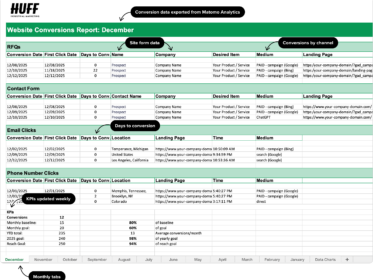
I’ve always had conversion tracking in place; however, when I made the switch from Google Analytics to Matomo in 2023, and then realized I still had to set up Goals in GA4 so that I could connect Google Ads to it, and then figure out what exactly were those “Primary” and “Secondary” goals that now appeared . . . well, things got a little hairy.
I wanted the Google machine to have the best data possible, so I went back through the Goals set up for each client. Good thing, too, as I found a couple of small mistakes. Fixed those, pronto.
The Google machine became happier. Conversions (aka leads) began to increase. Yay!
Step 3: Consistently make the ads better
Google gives you lots of recommendations on how to improve your ads, most of which are simply not applicable to niche manufacturers. Plus, their headline ideas are terrible! So I generally dismiss them.

The best piece of advice I found, however, comes from Jyll Saskin Gales, a Google Ads coach. She likens the Google Ads platform to a barge — and that changes to small accounts can take two to three weeks to show results. Her advice was to make changes slowly — and then wait. That made perfect sense!
To improve ad copy, I asked clients what they were hearing from their customers. I adjusted headlines and callouts and removed those that weren’t performing. I also used fewer of them — which allowed for better decision making.
And, I followed my own marketing instincts. Because I use Matomo Analytics versus GA4, I have to use Matomo’s URL Builder to create tracking parameters; it’s how I get Ads data to appear in clients’ Matomo reports.
Previous to Matomo, I relied on Google’s data for the site links. Site links are ad extensions: you can use them to call attention to other information on your website, such as About Us, Services, Products, etc.
In the Ads platform, however, it was difficult to know if the site links were getting clicks due to how Google presented the data.
I had already been tracking site link clicks, and could see the data in Matomo, but now I became much more strategic and began testing things.
Thanks to Matomo, I can see people clicking the site link versus the ad headline, and in some cases, converting. I now have data on which site links work, and which don’t. Having this data has made a huge difference.
Results
I began this work with clients toward the end of 2025. At the time, traffic from paid search was declining, as were conversions.
Today is a completely different story. For one client, the results have been dramatic. Traffic from Paid Search is up 55%. Conversions are up too — by 65% YTD.
But the biggest change has been with me. I’m actually having fun again. Understanding how to use Google and its machine learning, while ensuring my clients and I retain control of their accounts, messaging, and brand, has been key.
At its May 2026 Google Marketing Live event, Google said searchers will soon have the ability to ask an ad a question — and its AI will answer it by pulling content from the advertiser’s website.
I don’t know how this new feature will affect smaller manufacturers and their Ads programs but one thing is certain: I’ll be watching and learning to ensure clients continue to see consistent results.