
photo credit: MassimoVernicesole, iStockphoto
The Eagle-Tribune, a regional newspaper, sent me complementary print copies for a week. In the letter sent with the first newspaper – which arrived in my mailbox – Tracey Rauh, Editor, said the newspaper wanted to be sure that “select readers” such as myself were made aware of the newspaper’s presence in my small NH town.
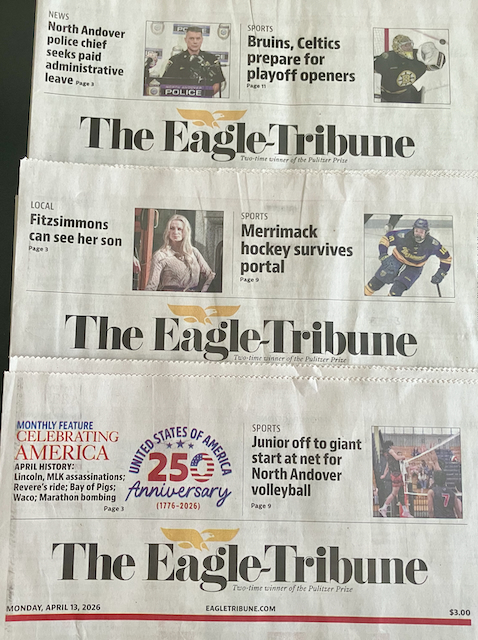
(Select readers. Yes, flattery will get you everywhere, ha!)
I haven’t read the newspaper in years. I used to be a daily reader. Beginning in my college days, I’d read whatever paper was “local” to me while eating breakfast. When I started working for myself, I added the Wall Street Journal.
The smell of ink and newsprint wafting from The Eagle-Tribune as I placed it on the kitchen counter felt incredibly comforting – a memory from simpler times. I made lunch and read the entire issue. What a soothing experience compared to the jangle and noise of the Internet.
At the same time, I had begun research regarding ReadyPost, the packaging, tapes, boxes, etc. the Post Office sells, and which are Made in the USA. I wanted to find out who manufactured the products.
During this research, I stumbled across the 169-page PDF, United States Postal Service: An American History (see link below), and realized the USPS was a story by itself – and an important one as it’s directly linked to our nation’s 250th anniversary and to manufacturing.
USPS mission: To support the free exchange of news, ideas, and opinions
The Second Continental Congress in Philadelphia set up the position of Postmaster General July 26, 1775 – “to be paid 1,000 dollars per annum and 340 dollar per annum for a Secretary and Comptroller – and as many deputies as deemed necessary.” (An American History, page 1)

According to the authors, the postal system was our first communications network as it facilitated commerce and strengthened the bonds of family and friendship. It also united a nation.
“The Founding Fathers believed that to succeed, a democratic form of government depended on the free exchange of news, ideas, and opinions” . . . including, as Thomas Jefferson wrote in 1804, “freedom of the press.”
I was surprised to learn that my receiving complementary copies of a newspaper in the mail dates back to 1792, when Congress, to ensure the success of democracy and the exchange of newspapers, passed the first major postal law allowing them to travel through the U.S. Mail at extremely low rates of postage. (An American History, page 1)
Today the United States Postal Service is a cornerstone institution, relied on by businesses and individuals across the entire United States. The USPS oversees the processing of millions of letters and packages every day.
According to Postal Facts (link below), the USPS processes on average:
- 371 million pounds of mail pieces each day
- 15.5 million mail pieces each hour
- 23.9 million packages each day
Despite email and other competing logistic services, an average of 12 million people visit the USPS.com website every day! I find that fact astounding!
The USPS plays a key role in manufacturing
To get the mail from one location to another, the USPS relied on several modes of transportation, beginning with steamboats, stagecoaches, and the Pony Express. Today it relies on rail, trucks, and planes.
I happen to live near the Old Stagecoach Byway, a 43-mile loop through Southern NH. The scenic byway, designated in 2014, is a preserved section of a 200+ year old stagecoach route that connected Boston, MA to Concord, NH.
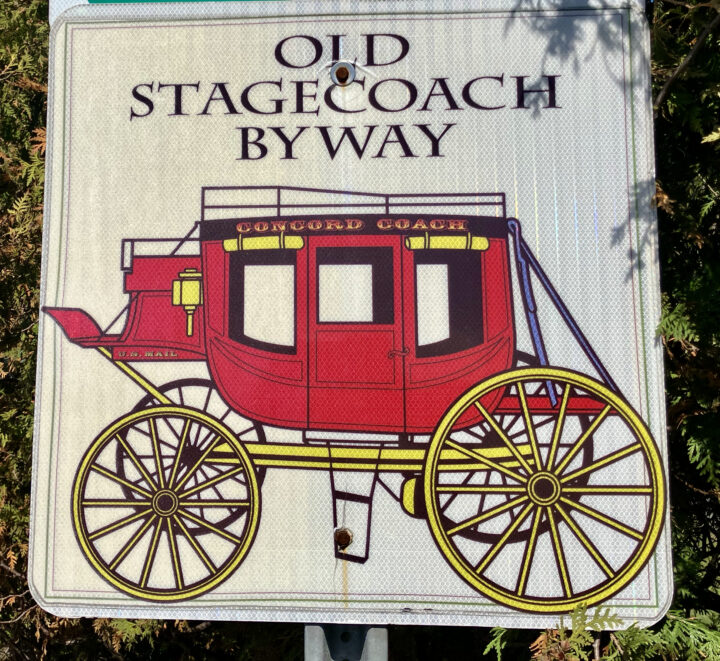
While the USPS didn’t invent steamboats or coaches, the Postal Service was instrumental in helping these industries grow and change. If stagecoach companies were part of the early postal delivery service, think of the other industries directly or indirectly related:
- Stagecoach builders and wheelwrights
- Horse breeders; blacksmiths; tack and feed suppliers
- Taverns (rest stops) along the stagecoach route
- Local famers supplying food and drink to the taverns
And, as Americans began moving westward, the Postal Service had to move with them — and handle the increased mail volume, vast distances, poor roads, and transportation options.
New technologies brought speed to mail processing and sorting, including mechanization and automation equipment, and visual scanning / sorting.
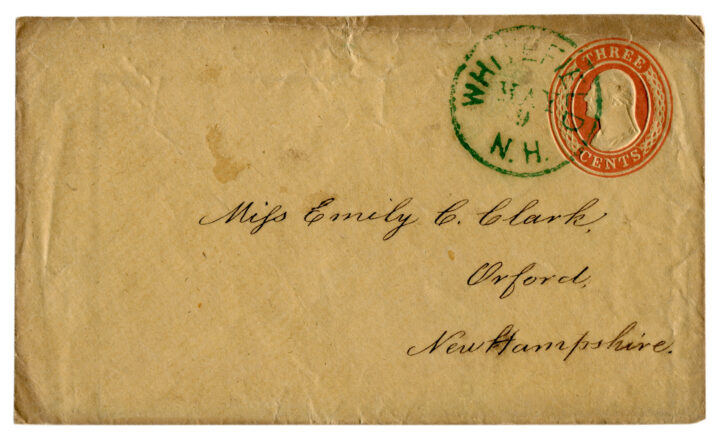
Artists were employed to create new stamp designs while also starting a new hobby — stamp collecting. Stamp production continues to rely on industry for high speed printing presses and the adhesive applied to the back of stamps — as well as envelopes and other items.
Crane Stationery, a paper mill founded in 1801, began manufacturing fine paper made from linen rags; the company was awarded the contract to produce the U.S. government’s currency paper in 1879.
And, don’t forget mailboxes. Whether a door slot, roadside box, or an apartment cluster mailbox unit, mailboxes are an industry unto themselves. Most importantly, each type has to be USPS approved (see link below).
“People want real mail”
“The Postal Service shall have as its basic functions the obligation to provide postal services to bind the nation together through the personal, educational, literary, and business correspondence of the people. It shall provide prompt, reliable, and efficient services to patrons in all areas and shall render postal services to all communities.” — Title 39 – Postal Service – U.S. Code
While electronic and digital technologies have eliminated much of the paper mail that used to arrive in our physical mailboxes, paper mail is still important because it continues to bind our nation, and other countries, together through personal correspondence.
Recently, I began volunteering at my local public library; each month, a group of charming children meet to handwrite letters to penpals here and abroad. It’s part of the global Kids for Peace program.
The librarian has the children write their notes in cursive since it’s no longer taught in schools.
I spend a lovely hour listening to the children talk and in-between conversation they raise their hands to ask how to make upper and lower case letters in cursive.
The librarian explains why being able to read cursive is important; she had me share my story of how I gave a family friend a bar mitzvah card that included my handwritten note — but he couldn’t read it.
I join them in writing notes — they to their penpals, me to colleagues and friends. The librarian ensures they address their envelopes properly, too. Life skills!
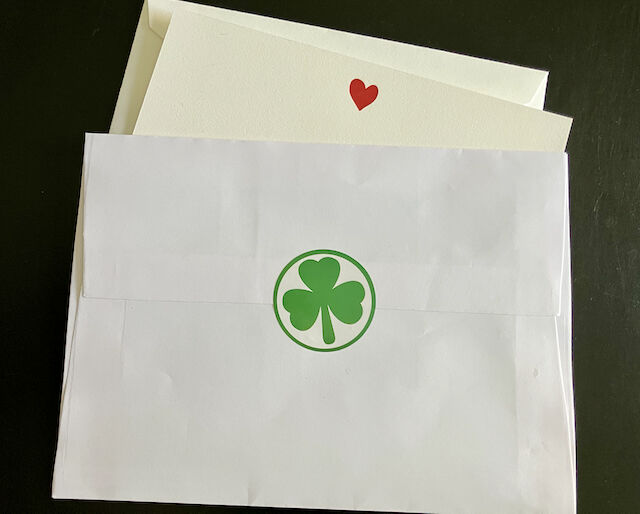
After the first meeting, I sent the librarian a handwritten note thanking her for allowing me to be part of the group. She sent a handwritten note back – which thrilled me.
As I wrote on LinkedIn, artificial intelligence may take over the world, but one thing it will never replace: The joy and happiness of receiving a lovely handwritten notecard in the mail.
Or as the librarian said, “People want real mail.”
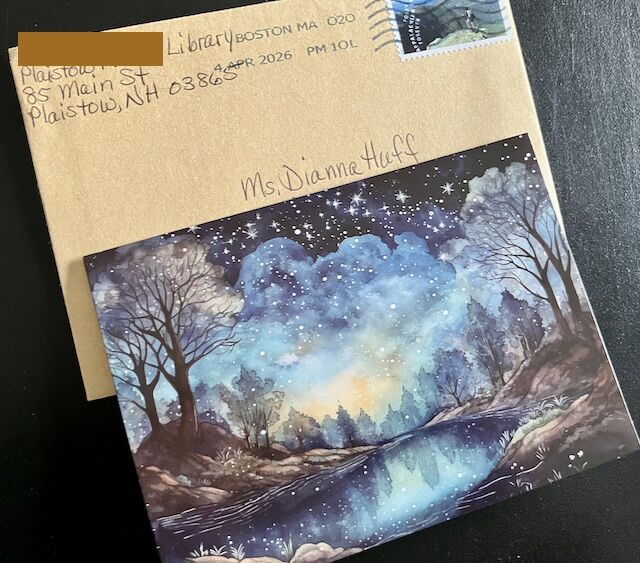
I know it’s easy to grumble about the USPS and its faults, but one thing for which I’m exceedingly grateful: I can still send letters and notecards to friends and family near and far – and receive their good tidings in return.
We’re incredibly fortunate to have the United States Postal Service – an organization that employs thousands of people who handle millions of pieces of mail every day, and ensure it arrives without mishap six days a week.
As we celebrate our nation’s 250th anniversary, give thanks to our Founding Fathers who had the foresight to understand the importance of freely sharing ideas – whether through freedom of the press or personal correspondence – and codified it.
More importantly, if you see your postal carrier, give him or her a huge thank you, too. Because they’re the ones who brighten your day by placing “real mail” in your box.
Links
The United States Postal Service, An American History: 250th Anniversary Edition (PDF)
Postal History: Benjamin Franklin (PDF)
Mailbox Approval & Regulations — USPS
USPS.com — I use the website to track packages, find zip codes, and create the customs forms for when I send stuff to my colleague Rachel Cunliffe in New Zealand
USPS YouTube channel — Lots of great videos
Still Made in USA — Janzer Mailboxes — A Keep It Made USA write up
ReadyPost Shipping Supplies: Made in the USA — A Keep It Made USA write up
Crane Stationery — “Perfection in stationery since 1801” — I love their writing papers and cards. Although now owned by a private equity company, they’re still made in the USA.
Frost-Stagecoach Historic Byway — Website by the local non-profit
The Robert Frost/Old Stagecoach Scenic Byway, New Hampshire — National Scenic Byway Association
Walter Isaacson, Author — Be sure to check out his biography about Benjamin Franklin (my favorite Founding Father). Link goes to his publisher’s website.
Full Disclosure
I’m not paid nor asked to write about products or the companies that make them. All links in this piece are FREE — meaning, they’re not sponsored or paid for.
My mission is to keep manufacturing jobs stateside and this blog is my way of giving back. We like to think a “small” choice, such as purchasing something made in the US by American workers, won’t make a difference. It does.