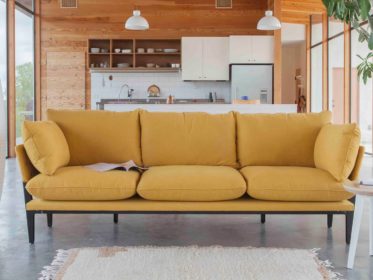

Furniture manufacturing has played a key role in America’s industrial story since Colonial times and — despite offshoring and automation — continues to do so. According to the Bureau of Labor Statistics, over 333,000 people are employed in various aspects of furniture making, including carpenters, furniture finishers, and upholsterers.
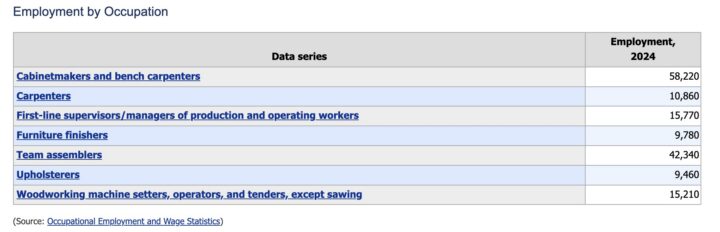
The numbers also tell one aspect of a larger story: Despite the changes within the industry, building a piece of furniture still requires experienced and knowledgeable hands-on fabrication skills.
Keeping this knowledge and craftsmanship alive and well is the mission of the Alexander Furniture Academy in Taylorsville, NC.
Established in 2016, the Alexander Furniture Academy is a training program designed and sponsored by regional furniture manufacturers to prepare students for long-term careers in the furniture industry.
Offered through Catawba Valley Community College (CVCC), the program is completely free to students.
I had the opportunity to interview Estaban Ocampo, an instructor at the Academy for over five years. He’s also the Supply Chain Coordinator at Craftmaster Furniture, where he’s been for eleven years.
(He provided all the photos you see here!)
Dianna Huff: How did you become an instructor at Alexander Furniture Academy?
Esteban Ocampo: When I started at Craftmaster, I was the upholstery supervisor while also doing side gigs – recovering boats, people’s dining chairs, etc.
I wanted to learn how to sew, so I took the sewing class at CVCC. Toward the end of the course, the program director at the time, Lori Miller, gave me a job application for the Alexander Furniture Academy. I was hired.
DH: What was your role and what did you learn?
EO: The Academy has two sections – the sewing side and the upholstery side, with two to three instructors who teach everything. For the first few months, all I did was watch and take notes.
I realized from my observations that the program instruction was a bit confusing to students. Because I worked at Craftmaster, I could see the instructors were teaching students legacy skills versus the skills being used at the factory.
I wanted to simplify the instruction, and how students learned, so I created a study guide detailing the process of furniture upholstery. It helped to get everyone on the same page.
DH: How many students did you see each session? How did they learn?

EO: Each 24-week session we’d see six to sixteen students. The program is free to students because we had industry sponsors, but it was also self-supporting. At the end of each session, we’d sell the furniture students made and then buy new materials, frames, etc. for the next one.
The students ranged from high school graduates and people working minimum wage jobs to those already in the industry who wanted higher skilled jobs on the production line – and thus higher pay.
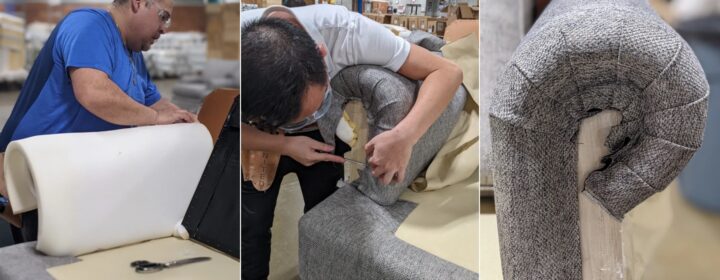
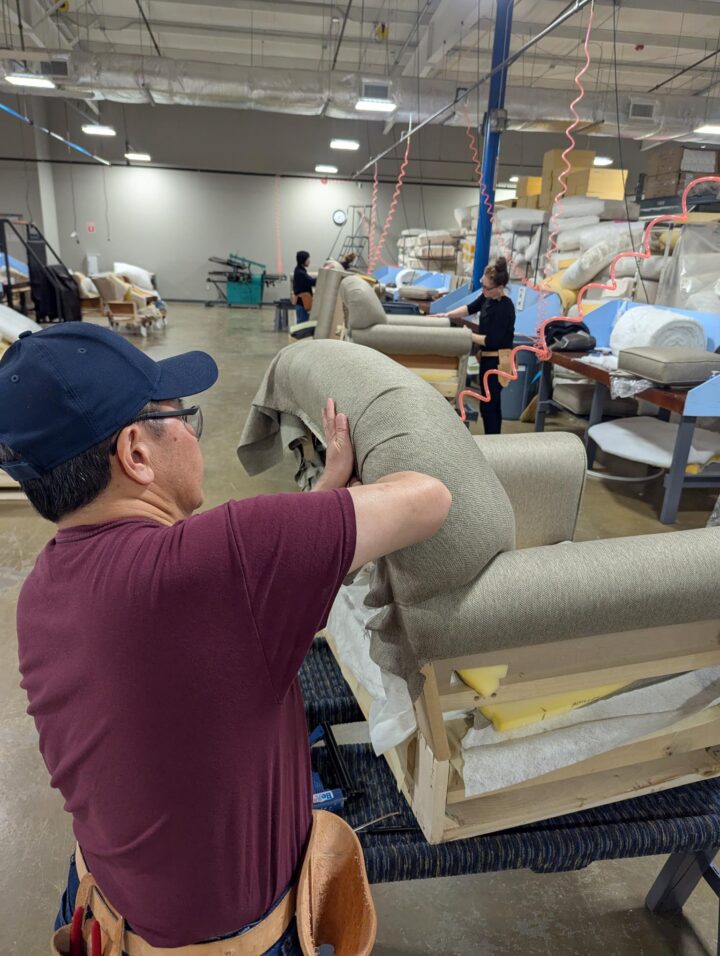
The goal was for each student to build an entire piece of furniture by themselves. Students were taught all aspects of the build so that when they graduated, they were skilled enough to fit into manufacturers’ production lines where an opening existed.
In other words, we didn’t train for a specific line job per se.
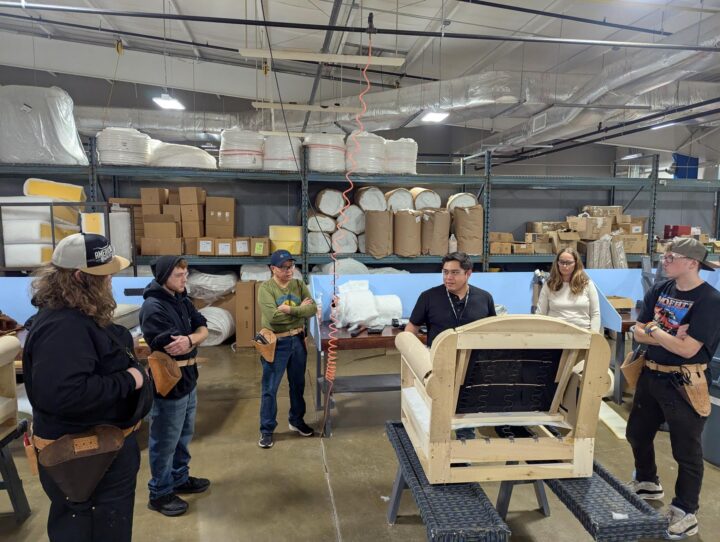
To teach students, I would first demonstrate the entire process. When someone had a question, I’d get another frame or piece and let the student try it while I guided them. I encouraged people to take notes, photos, video, etc.
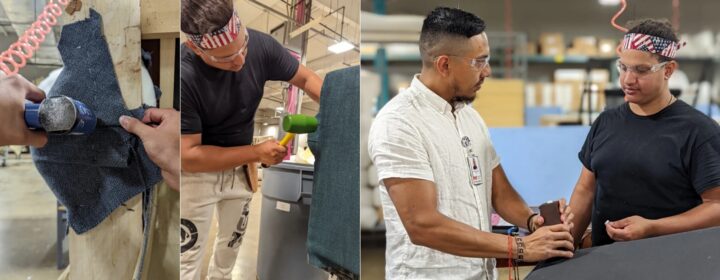
They were then sent back to their stations where they’d try and do it themselves. If something wasn’t done correctly, I’d have the student take it apart and try again. If a student complained, I would explain repetition is how you get better.
DH: How soon were students hired after graduation?
EO: Hiring was based on what a manufacturer needed. One reason I was adamant about following a specific process is because I wanted the Academy and our instruction to reflect well. I wanted companies to feel confident about hiring our graduates.
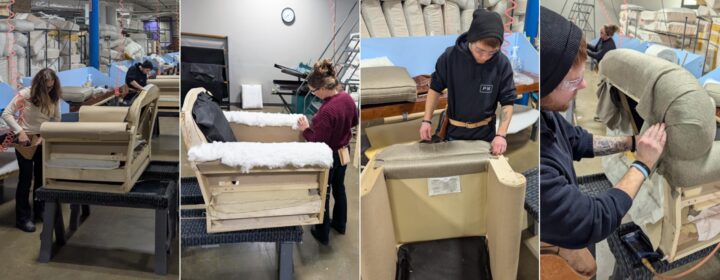
I’d tell students, “When you graduate, you’ll know only enough to get your foot in the door. Some companies will skill-test you first to see what you know. To succeed, you have to ask questions and continue learning. It can take up to two years to get the hang of things and learn the process.”
I received several emails from students after saying, “You were strict, but you made it happen, and here I am, making more money. Thank you.”
DH: What are your plans now that you’ve stopped teaching?
EO: I made the decision to stop teaching because my daughter is four years old. I want to spend time with her before she starts school. With my full-time job at Craftmaster, and my teaching, I was working 7:00 AM to 8:30 PM, five days a week.
After a few years, I was burnt out. I wasn’t coming home. I made the decision to cut to two days, and then one day. During this time, I mentored Luis Torres and persuaded him to become an instructor.
I’m still with Craftmaster full-time as the Supply Chain Coordinator. I manage production scheduling and order planning across six plants, and oversee procurement and materials flow. I coordinate domestic and international sourcing – my job is to ensure continuous production with minimal downtime.
DH: In your work for Craftmaster, what are some of the trends you’re seeing? Is furniture manufacturing coming back to America?
EO: A lot of furniture is still made here, but sourcing domestic components and mechanisms is tough, so some items do come from China. Craftmaster makes its own frames and cushions domestically. Fill / poly is domestic as well. The cutting and sewing is done here, plus some outside the U.S.
Textiles are still tough to source domestically because the U.S. textile industry has changed due to consolidation and mill closures.
For example, textile manufacturer Burlington Fabrics is now part of Elevate Textiles, a global company. Carolina Mills is now Carolina Specialty Fabrics. We still have STI Fabrics and Valdeze Weavers in North Carolina.
The main challenge is what consumers want, which is fast delivery and cheap, trendy furniture.
DH: Yes. When I ordered two upholstered poofs for my living room, the delivery was six weeks. But then again, I chose the fabric I wanted, which made them semi-custom. They were made in North Carolina. I didn’t mind the wait. They’re very well made.
EO: The problem with cheap furniture: it doesn’t last long – maybe six months. When it’s made in the U.S. by American workers, we put pride in our work.
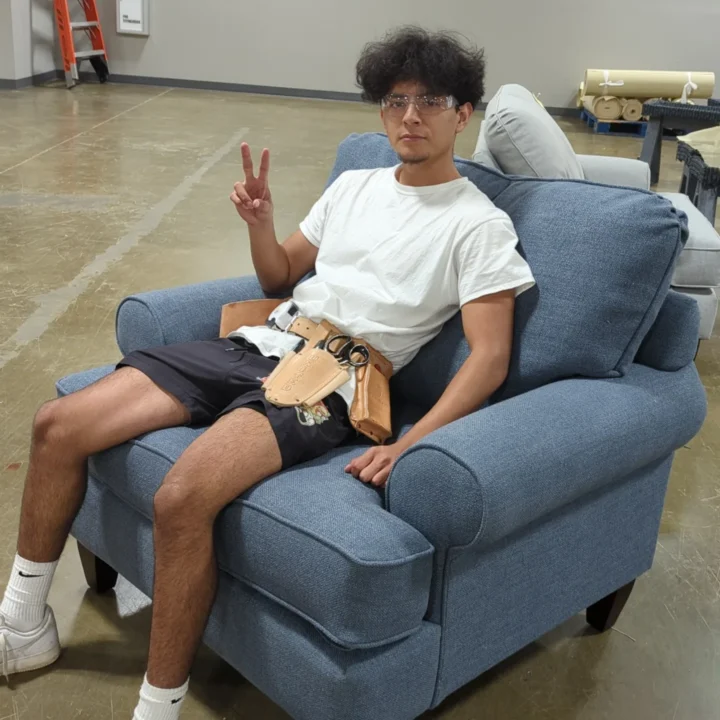
A good piece of furniture should last at least seven years – and even longer depending on its use and care.
I do think, however, the U.S. furniture industry is becoming stronger. Covid changed a lot of people’s perceptions and helped them understand where things were made. Sustainability is now something many people understand and appreciate. If your furniture doesn’t last long and ends up in the trash, it’s not sustainable.
Esteban, thank you for this interview and for your years of work teaching people the art of furniture making. I’m glad I reached out!
To learn more about the Alexander Furniture Academy, visit the Catawba Valley Community College website: cvcc.edu/alexander-complex
To view the Made in USA Craftmaster Furniture collection, visit: www.cmfurniture.com
Links
STI Fabrics: stifabrics.com
Valdeze Weavers: www.valdeseweavers.com
Full Disclosure
I’m not paid nor asked to write about products or the companies that make them. All links in this piece are FREE — meaning, they’re not sponsored or paid for.
My mission is to keep manufacturing jobs stateside and this blog is my way of giving back. We like to think a “small” choice, such as purchasing something made in the US by American workers, won’t make a difference. It does.